What, noooooooooooo, you cantdo thsi to us… at least put it in comings and goings or something
3 Likes
I did NOT realize that
2 Likes
nooooooo
2 Likes
yep!!
1 Like
yeah, @Stem.dojo is wrong… he is so wrong
1 Like
PREFACE
Uhhhhhh. I really can’t find anything else to say for the Preface, but let’s begin this installment for Marvels-Of-Software-Engineering or something else like that.
AN ESSAY ABOUT DISCORD
The internet houses many unique online communities across the world, whether it is a group of DJs or a bunch of High School students. But the internet is a vast place, with many websites and advertisements, and it can sometimes be difficult to find a way to join and talk to a community for real. But there exists one piece of software that can help ease your struggles in finding a good community, and that is otherwise called Discord.

In 2015, Discord was released by Jason Citron and Stanislav Vishnevskiy. The platform was developed to address a very specific issue: there was no good way for gamers to communicate with each other live. Technically, other messaging technologies (e.g., Skype) did work but were quite clunky and inconvenient, especially if gamers were running massive games in the background. It would later be rebranded to handle communication across all communities other than gaming.
Also, fun fact: the idea for Discord was born from a previous iPad game that Stanislav Vishnevskiy and Jason Citron released (in 2014) called Fates Forever. But it failed to gain enough traction to be sustainable. The duo then realized that Fates Forever’s in-game chat mechanics could solve the communication problem for many gamers, and that’s how Discord began.

(Stanislav Vishnevskiy and Jason Citron)
The most common way that people communicate on Discord is through text messages. And this is where we really begin to dive deep into how Discord works on the inside: what happens when you press the send button for any particular text message?
Let us get through a quick mini lesson real quick, and it will be explained along the way. If you want to access something on the World Wide Web (like the MakeCode Forums website), the protocol HTTP is your best friend. When you click on the hyperlink that gets you into the MakeCode Forums website, an HTTP (GET) request will be sent directly to the forum’s servers, asking “hey, could you return the data of this website, so I could access the pages?” The servers should oblige and return the website’s data, then you’ll be able to see the website.
But that’s not the whole story either; HTTP can also do more than just fetch you some data. You can also send data across the internet using that protocol. Hypothetically, when you post a new selfie on Facebook, an HTTP (POST) request will be sent and stored on Facebook’s servers containing all the data that your post contains. In this case, you would expect Facebook’s servers to be huge, consisting of billions of distinct posts in total.

(How a standard HTTP request works)
Discord messaging works a lot like how Facebook does it. When you send a message on Discord, an HTTP (POST) request will be sent to the Discord servers, containing the contents of your message. But things are not as simple as they seem, as in just spamming a bunch of HTTP requests. Discord is meant to be an instant-messaging platform; when a buddy of yours sends you a message, you should be able to see it as soon as they press the “send” button.
But latency exists in HTTP requests for this type of thing. See, if we’re 100% reliant on HTTP and want to see new messages, then repeatedly, an HTTP request will be automatically sent to the servers, asking for any new information (messages in this case). This is known as Polling. Typically, an automatic HTTP request is sent every couple of seconds. So, this meant that when your friend sent you a message, you might have to wait 5 - 10 seconds for that message to actually appear on your screen, which is inconvenient.
See, the issue with HTTP in this case is that it only has a one-way connection with servers. When you send a message through standard HTTP (POST) requests and nothing else, the request will effectively send your message’s contents to the server. But that connection to the server goes away shortly after the server receives your message content. This is why polling has to exist for the receiving end to see your messages; they won’t be able to see the message instantly if their route to the server is closed.

(How WebSockets work for the client and the server)
So, what if you make it so that the connection between the client and the server always remains open 24/7, even after you sent an HTTP request? This is where WebSockets come in. Now, when you send a Discord message, the receiving end should receive your message instantly. Now that they have a permanent connection with the servers, the servers can send them your message content without needing any additional HTTP requests at all.
Of course, Discord isn’t entirely made for sending text messages over WebSockets. Discord also has a Voice Channels feature, which allows users to actually talk to each other using their own voices and not their keyboards. Now, when you do click and enter a Voice Channel, a WebSockets connection to the Discord servers is established. But when we are handling audio and not text, things tend to get a bit more nuanced.
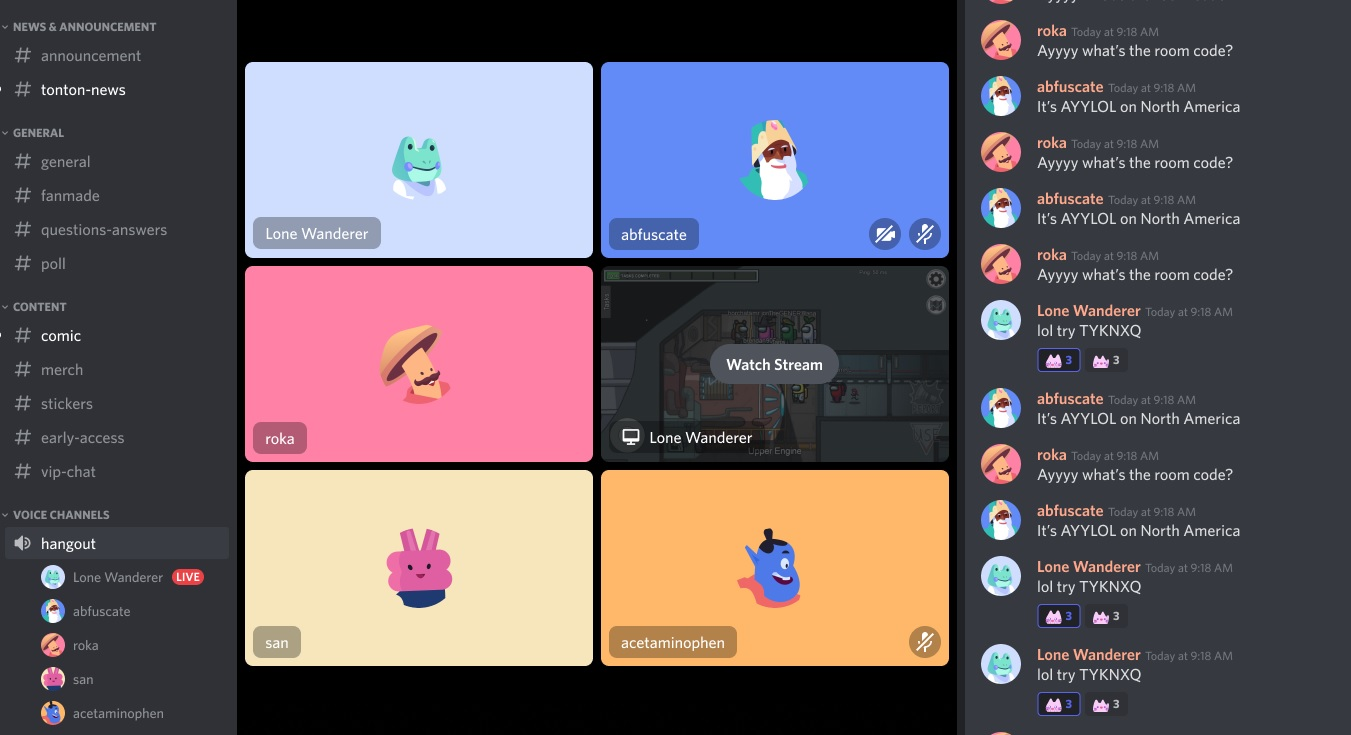
For Discord VC audio, speed matters more than accuracy. If there exists a lag of a few seconds, then your camera can show your lips moving, but the sound of your voice only comes later when your mouth is closed. That type of thing is extremely awkward for everyone in the VC. So, how does Discord ensure that the audio comes in as fast as possible?
Mini lesson #2. When you talk into your microphone, your voice audio is broken up into several chunks called “packets”. Packets are then sent through a massive network across the internet. When it reaches the end of the network, packets are transmitted to the servers, and the receiving end will be able to hear your voice clearly. There are 2 possible protocols for the transmission process: UDP and TCP.

(good visual I found online that shows how packets travel across the internet)
Anyways, to cut a lot of stuff down, Discord primarily uses the UDP protocol in their VCs since it is a faster one. As soon as one of the many packets reach their destination, they are immediately transmitted by UDP without waiting for all the other packets to arrive. Meanwhile, for TCP, it waits for all the packets to arrive at the end of the network. If any packets are missing, TCP sends a request for that missing packet to be resent. So it takes more time for data to be transmitted due to all the bureaucracy.
(…)
So, let’s restart at the beginning. Discord started off in 2015 for a bunch of gamers to communicate with one another online, quite the niche concept. And Today, Discord has nearly 700 million user accounts registered, a true testament to the cultural reach that Discord holds in this current era. And to think, this empire all started from one failed video game.
THE END
15 Likes
what?
1 Like
Hi I did not talk in a while
2 Likes

It’s something,
it’s really something.
1 Like
wassup
1 Like
I’ll trade you 1 cat picture for 1 dog picture
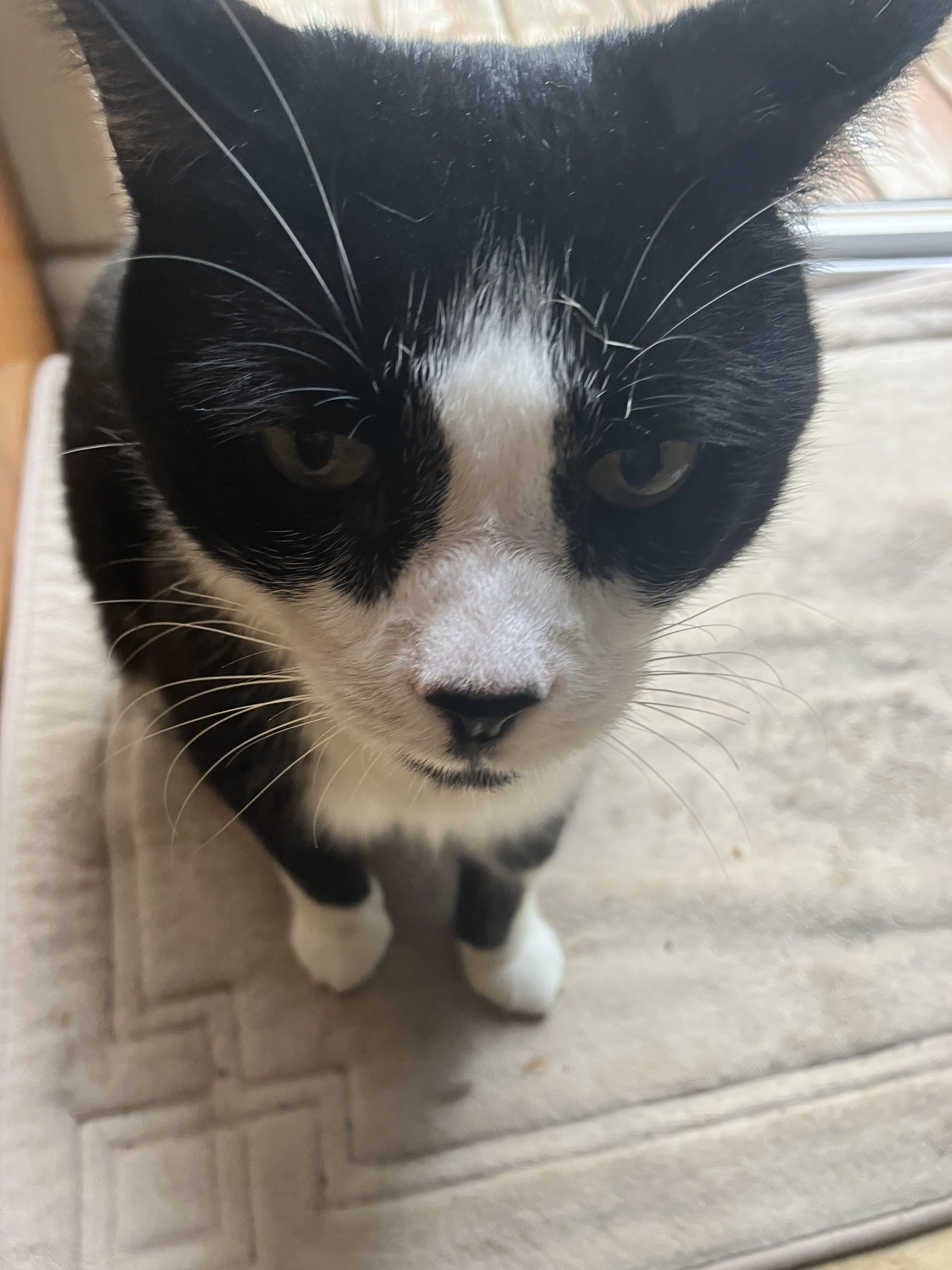
Only if you are comfortable of course, and try not to include too many personal details in the picture!
13 Likes
GAWHHWHWHHHHH lovely boy!
4 Likes
But… why???
3 Likes
find it funny how your name is WoofWoof, and your sending a picture of a cat, maybe thats just me.
4 Likes
that me hehe
1 Like
aw he looks like you @WoofWoof is he what your pfp is based on?
2 Likes
remind me to do it tomorrow because i cant today sadly 
2 Likes
Today (8/1/26) I
the day
Woke up and made breakfast, my mom had me and my brothers help clean the garage, so that took up 90% of the day, then when we finished, at dinner we began to watch into the spider verse
5 Likes
