It looks like it’s sneezing now I can’t unsee it it’s not biting it’s sneezing I swear
2 Likes
No pink placeholder sprite is the goat
1 Like
The snake is sneezing
2 Likes
I did it too and now I have a snek
2 Likes
I like to think that  is for when a post is evil, and I have no idea for when to use
6 Likes
It is up to interpretation. The ducky’s animation looks like their vibing, so sometimes I use it for that. I have also been using it on every single post in the bird jam, because bird.
I use the snake when it feels like someone is biting down on something.
4 Likes
he’s your man.
3 Likes
I thought it was biting
1 Like
Yes, you are exactly right; the snake is casually sneezing.
Sneezing some venom out on its enemies, of course- /jk
5 Likes
yeah i mean evolution
1 Like
Don’t make your dream game early. Is something I wish I knew when I started.
7 Likes
It looks both ways tho
1 Like
and now I actually lost the code
hey @_jupiter my safety blocker thing blocked you

6 Likes
bruh you are kidding..! no one has a pet duck named ‘man’.
3 Likes
PREFACE
Truth be told, I was a little hesitant when choosing an idea for this essay. For the 3rd installment, I wanted to build the essay around a video content theme. I had considered many other online video platforms to write about, like Netflix or Twitch. But some friends convinced me to do YouTube since it was the more iconic staple on the internet; of course, this meant that there was going to be a lot more content to cover.
Similarly to the HFT essay, I finished it way faster than I expected, so I’m probably just going to ditch the monthly schedule altogether. Lowkey, I ought to back up a bit with all the yap I have been posting lately; also, this sort of is the longest Marvel-Of-Software-Engineering essay that I have written so far. But let’s just get started and get this entire thing over with.
AN ESSAY ABOUT YOUTUBE
In today’s era, we use the media to communicate ideas to billions of people across the globe. A lot of that media can be packaged through online videos posted on the internet for anyone to watch in their own time. Many big tech companies that serve as online video platforms have gained significant traction, including applications like Netflix, TikTok (a product of ByteDance), or Twitch (owned by Amazon). But there is one that sits on a throne, that is otherwise known as YouTube.
For over 10 years, YouTube has kept its dominance on the internet nice and strong and stable. A dominance so great that it is considered the #2 most-visited website in the world, just behind Google Search (covered this in a past essay). A dominance so great that it trumps even Netflix, TikTok, or Twitch as an online video platform. But let’s backtrack a bit: how did things even begin to happen?
The tale of YouTube starts off in the year 2005 with a trio who once worked at the dominant Fintech company known as PayPal. These 3 employees went by the names of Chad Hurley, Steve Chen, and Jawed Karim. Now, according to most media sources, it has been said that the idea for YouTube was sparked at a dinner party. The trio recorded some cool videos and wanted to share them with others.
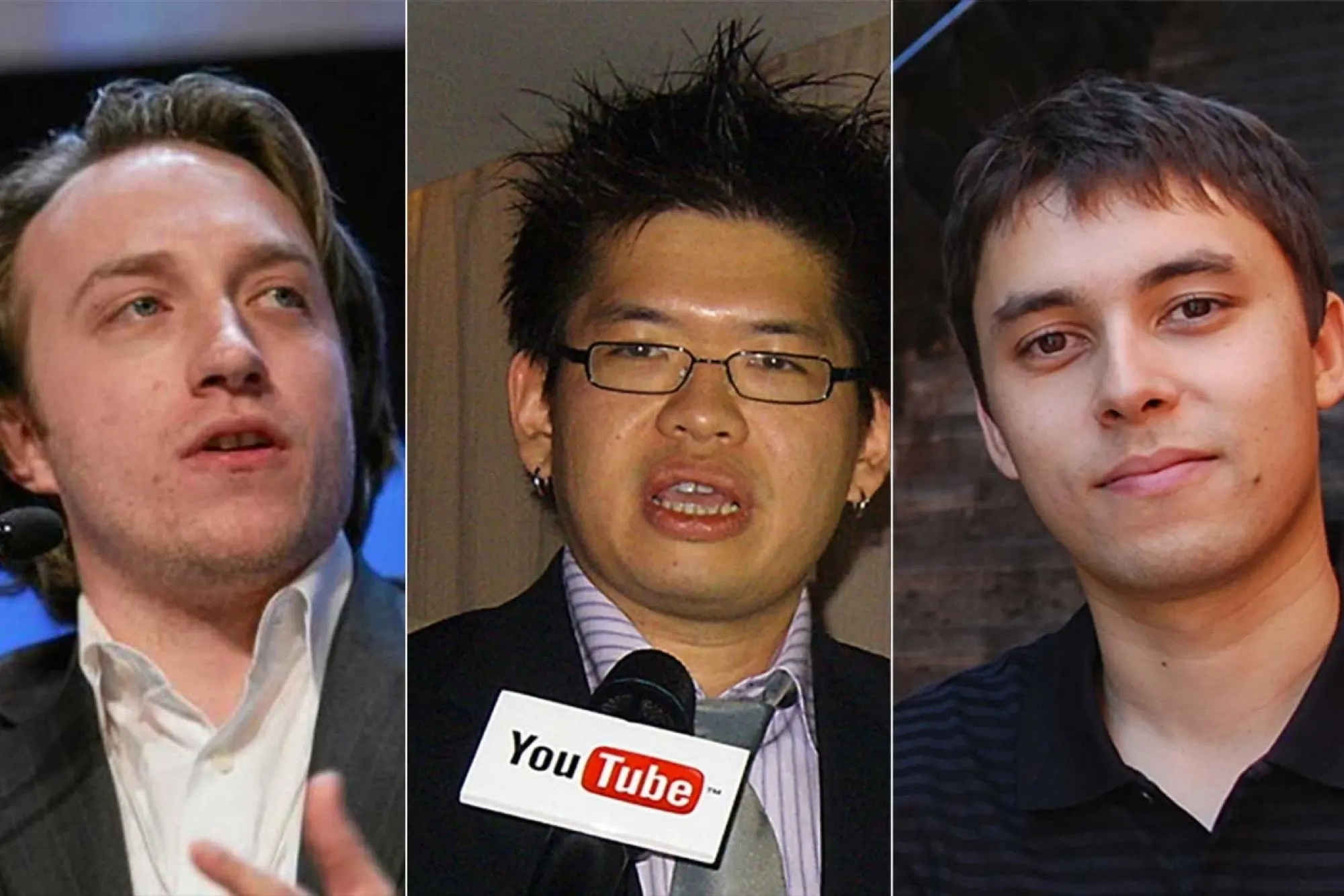
(Chad Hurley, Steve Chen, and Jawed Karim)
Unfortunately, when they tried to email those videos to others, things went wrong. The video file sizes were a tad too big to be sent through the network. They found that it was difficult to share videos across the internet, but they also wondered if they could make sharing and viewing videos online easier as well. Prior to 2005, video-sharing sites (e.g., ShareYourWorld) did exist on the internet. But trying to actually watch the content was no more, no less than inconvenient; file sizes were so large that downloading external software was needed.
(NOTE that there has been a dispute over the truthfulness regarding the dinner party origins, with Karim claiming that the dinner party story was fabricated to please the mass media, but there is some other self-contradictory stuff online, so I’ll use the common story here)
Later in 2005, during Valentine’s Day, YouTube was born. The funny thing is that the site was originally meant to be for dating purposes; women would post videos describing their ideal partners, and maybe the ideal partner could make a response. To cut it short, the dating site idea did not gain as much traction as the founders had hoped, and they eventually rebranded YouTube as a place for all types of videos/content.

(The first ever YouTube video, having been posted by cofounder Jawed Karim)
Eventually, in 2006, the tech giant Google acquired YouTube for $1.65 billion USD in Google’s stock shares, having recognized the massive potential that the startup had. Today, this is considered one of the smartest investments ever made in history. YouTube is considered a money-printing machine for the larger corporation, generating billions in revenue from ads and subscriptions. (Now, on an unrelated note, Google has a habit of buying out and acquiring many tech startups; this also led to controversy regarding antitrust, with Google being declared a monopolist).
Google also boosted YouTube’s popularity significantly, which also leads to one of the most impressive things about YouTube: how they handle scalability.
As said before, YouTube is currently the 2nd most popular site on the internet, with over 100,000,000 people using its application every day. Now that is a very large number. For most web applications, if you had that many people making inputs and sending queries at once (e.g., clicking on a video), the site’s performance would typically get very slow or crash entirely. The volume is just too overwhelming for the backend servers to handle. It’s like what you see with most APIs with their rate-limiting conditions.
To avoid crashing issues for users, YouTube does not entirely rely on its own original databases + servers at Google’s data centers in Silicon Valley. Rather, they set up thousands of servers across the globe in a variety of areas, creating a vast network. These servers contain copies of trending/popular YouTube videos in several chunks (more on that later). They are also called Edge servers or Cache servers.

Now, if you click on a video that you want to watch, the request is sent to the specific server nearest to your location, which then handles everything and returns the video. It does not go all the way to California. This prevents the risk of all 100,000,000 requests being sent to one single data center, overwhelming it, and perhaps causing delay/latency. This strategy is known as a Content Delivery Network (CDN).
This also brings us to how YouTube handles users uploading videos. Video files are quite large on their own, and they caused a lot of issues for past online video platforms. So, these files are split into more manageable pieces/chunks. Chunks are then transcoded into different screen resolutions (e.g., 720p) for compatibility across all users. These chunks are then copied and distributed into the Cache Servers across the world in parallel (depending on how trending the video gets), so other users can watch the video when clicking on the thumbnail.
Now, with all that stuff having been covered, let’s dive into the juiciest part of the steak, the one algorithm that controls what you see on your screen: YouTube’s Recommendations.

When YouTube was initially released in 2005, the algorithm for recommendations wasn’t all that complicated. It simply showed you videos with the most views and popularity, and this methodology was considered flawed. YouTubers saw through these ways, and it resulted in a massive amount of annoying clickbait showing up on your feed. There was also no personalization, no catering based on the user’s individualized interests, so there’s a chance that someone who is not a fan of horror gets a horror video on the home screen.
Google eventually realized this clickbait situation in the year 2012 and decided to change the algorithm to not be as reliant on view counts. Typically, when a user clicks on a clickbait thumbnail, they will find out they were tricked very quickly and will immediately leave the page. So the YouTube algorithm was modified to now focus on a video’s “watch time”, how long a user will watch the video before leaving. Quite an improvement from 2005’s algorithm.
That’s not to say that there still weren’t issues, though; authenticity does not necessarily equate to quality; there was still that chance of a hate-speech-riddled video being on the home screen. Also, people eventually learned how to manipulate the 2012 algorithm in their favor for their clickbait thumbnails, like artificially increasing their video length to enlarge their watch times. So the algorithm continued to adapt to these issues, taking in the number of likes/dislikes, user reports on videos, and user subscriptions/preferences, and so on and so forth.
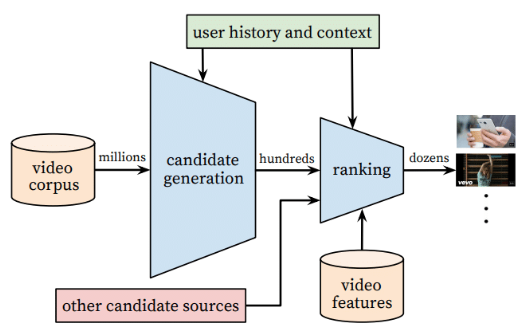
Today, YouTube has adopted heavy usage of AI into its algorithms, and the process can be separated into 2 parts. The first part involves getting a list of potential videos from neural networks. It essentially creates a user’s profile based on their preferences from a variety of factors (e.g., watch history). Then the neural network also finds a bunch of videos and builds a specific profile around each of them (e.g., genres). Then, the neural network tries to find matches with the user’s preferences and any of the video profiles, which then makes up the entire home screen video list.
Then part 2 of the entire process deals with the ranking process. Which video from the list should be at the top of the page, and which one should be at the bottom? Each video in the list is scored by a neural network based on several factors that indicate quality; such factors include (but are not limited to) watch time and likes/dislikes. Videos with the highest scores get the immediate spotlight on the home screen, and you need to scroll further down to see the lower-scoring ones. It’s just like how Google Search works if you think about it.
(…)
So what is the moral of the story based on what YouTube’s history has shown us? Well. If Google comes at you, packing the heat, with a deal of $1.65 billion USD in stock for acquiring your startup. You better take it.
On a more serious note, though, YouTube has changed the way we access information across the world for the billions of people out there. If you wanted any sort of information, YouTube would be your most accessible source, right behind Google’s Search engine. Gone are the days when you had to download external software or purchase high-priced hardware to watch stuff and take in the media; now all you need to do is click on one single thumbnail, and let all that stuff flow right in. I think that YouTube’s dominance is going to stay very high for the distant future, just like all the other stuff Google has.
8 Likes
dibs on the ducky : O

5 Likes
The young baby child Lego thingy
1 Like
youtube is godsend for visual learners
1 Like
I was on a trip for the past month and while I was on the trip some stuff that I will not get into detail about happened and the trip got extended past the 20th.
I might not still host this depending on how many people are participating so…
Will you be participating?
- Yes.
- No.
- Yes, @ me when it starts.
- No for now.
0
voters
4 Likes