PREFACE
It is currently 07/12/2026 as I am typing out the preface. So, like 1 week ago, I posted a poll where I suggested the idea ( Chatting Area! Have fun! - #8629 by Taser ) that I could write monthly essays that essentially yaps about a specific marvel of software engineering. It seems like quite a bit of the MakeCoders on the forums liked the idea, so here we are. I kind of forgot what else to say for the intro here, so let’s just get a move on.
AN ESSAY ABOUT GOOGLE SEARCH
If you wanted to find any information on the vast World Wide Web, there are a variety of search engines and tools that you can pull out of your brain, like Bing or Yahoo. But what is the first search engine that will likely always pop up in your head? It is Google. It’s for good reason as well, with the corporation holding control of over 90% of the worldwide search market.
It’s worth noting that Google’s search engine was not the first search engine to ever exist, just like how Apple’s iPhone was not the first smartphone to ever exist. They were just new products in an already-existing field that revolutionized it, and they had made massive profits + success as a result of that.
Prior to Google, most internet search engines used a “keyword matching” algorithm; websites were put in order based on the number of times the keyword (the stuff you typed in the search bar) showed up on the webpage. If you tried to search for “pears”, the website that appeared at the top was the one that had the most cases of “pears” showing up in text.
Unfortunately, this is all considered flawed methodology. With the only basis (for which website is given the spotlight) being from a counter of keyword appearances, there were some inevitably bad results. People knew about keyword matching algorithms and could manipulate them in their favor. If you wanted to search for “Apple” as in the tech company, there was the risk that the website at the top did not belong to the official corporation but to a malicious copycat website. Needless to say, Google Search was developed to address these suboptimal ways of past internet search engines.

(Larry Page and Sergey Brin)
But let us first get some context regarding the 2 minds who started it all. Larry Page and Sergey Brin. These 2 met when they were students at Stanford doing a PhD in Computer Science during the year 1995, with Sergey Brin having been in grad school before Page came along. One night, Page had a dream where he supposedly downloaded the entire World Wide Web and kept only the web application links; that one dream became the basis of Google’s algorithm really quickly.
After that night, Larry Page and Sergey Brin quickly got to work on creating the mathematical algorithm based on what Page had dreamed about; the algorithm was called PageRank (named after Larry Page). As the “rank” part of the name implies, the algorithm involved not “keyword matching” but scoring and ranking webpages by quality/importance, already setting it above past search engines on the internet.
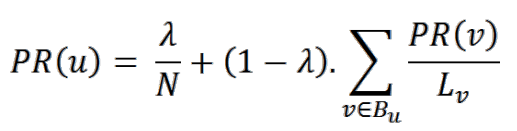
In PageRank, the basis for scoring webpage quality was based on the hyperlinks that sites contained. Hyperlinks would be seen as high value, like research paper citations. Not all hyperlinks are made equal; a link to a highly credible webpage (e.g., Harvard University) is given more weight in the mathematical algorithm compared to an unknown opinion-based blog website. The algorithm also made the safe assumption that there was an 85% chance that a web surfer would randomly click on links without getting bored; this was known as the damping factor.
The PageRank algorithm was used for the larger search engine project known as Backrub. In 1997, though, the 2 founders realized that Backrub was a horrible name, and it was renamed to the name we all know today: Google. The new domain name was initially meant to be “Googol,” as in referring to the massive number (10^100). But then a typo happened, resulting in “Google,” and the name stuck after that.
Google continues to utilize the PageRank algorithm in its search engine to this day, where webpage quality is based on contained hyperlinks. However, over the years, the full algorithm has changed quite a bit; PageRank’s formula is now one piece of the puzzle rather than being the sole backbone of the entire engine, with a lot more utilization in AI/ML applications to get more accurate search results.
(↑ One particular well-known AI application that Google uses in its search engine is known as BERT, which takes into account all the words in the user’s query with the surrounding context, rather than just individually analyzing every last word like in the past. This allows for more nuance and potentially more relevant results. This is also considered an application of Natural Language Processing (NLP) and transformers)
Today, Google uses a three-step process that makes the entire search engine work the way it is. The first step involves having web crawlers scour through the World Wide Web in search of billions of accessible webpages; a lot of these webpages are discovered through hyperlinks in other applications, and other webpages have already been discovered. These crawlers are known as Googlebots, and they come in large numbers through a lot of powerful computers.
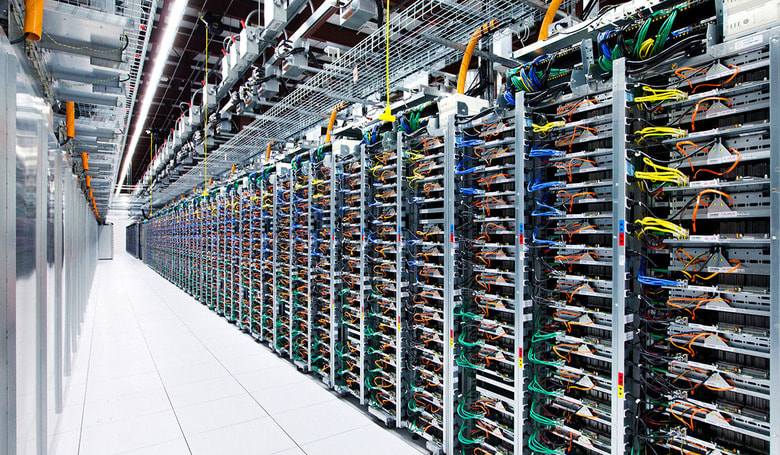
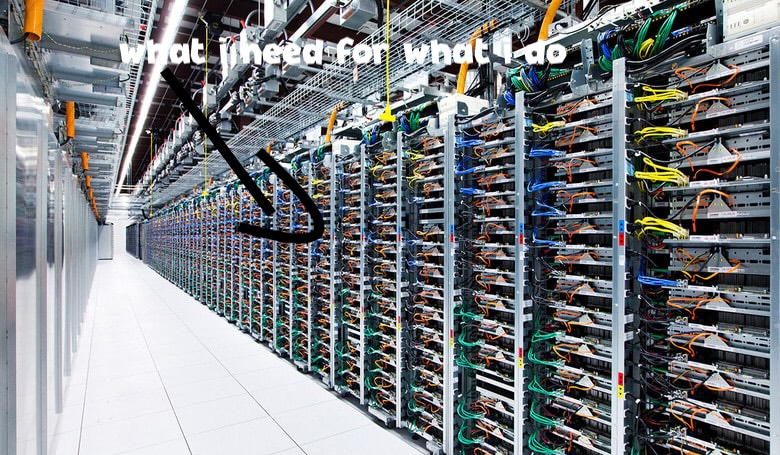
(Google’s Servers)
After a website has been crawled through by a Googlebot, it is time for step 2: indexing. An in-depth analysis is done on the webpage and all the data that it contains (e.g., text, images) through powerful algorithms. This is to determine just what the webpage contains, along with potential quality/credibility. The data found is then put into a database called Google Index.
Also, note that Google has its Googlebots crawl through billions of webpages, so no doubt that the Index is going to have to run on thousands of servers simultaneously. In fact, the Google index has a size exceeding 100,000,000 gigabytes, which is hard to imagine the scale of. You could stuff a lot of distinct, common, or rare items across all of human history, and there is a good chance that there will still be a very large chunk of leftover space.
The 3rd and final step (serving/ranking) comes in when the user actually searches for something. The algorithm goes through the Google Index to find relevant webpages/websites to bring out. All these pages are then ranked in order based on their overall quality/credibility, which is calculated based on a variety of factors, such as content, your location, and load speed. The ranking is done through hundreds of complex ranking systems (including PageRank). The number of websites to rank is in the billions. And your search results are shown in less than 1 second, isn’t that just amazing?
As mentioned at the very start, Google Search is without a doubt the most popular search engine out there. There is a reason why over half of FAANG or Big Tech never attempted to create a competitor against the behemoth that is the Google Search algorithm. Now, as for how Google got its reputation for that instance. Tech billionaire Peter Thiel says it best:
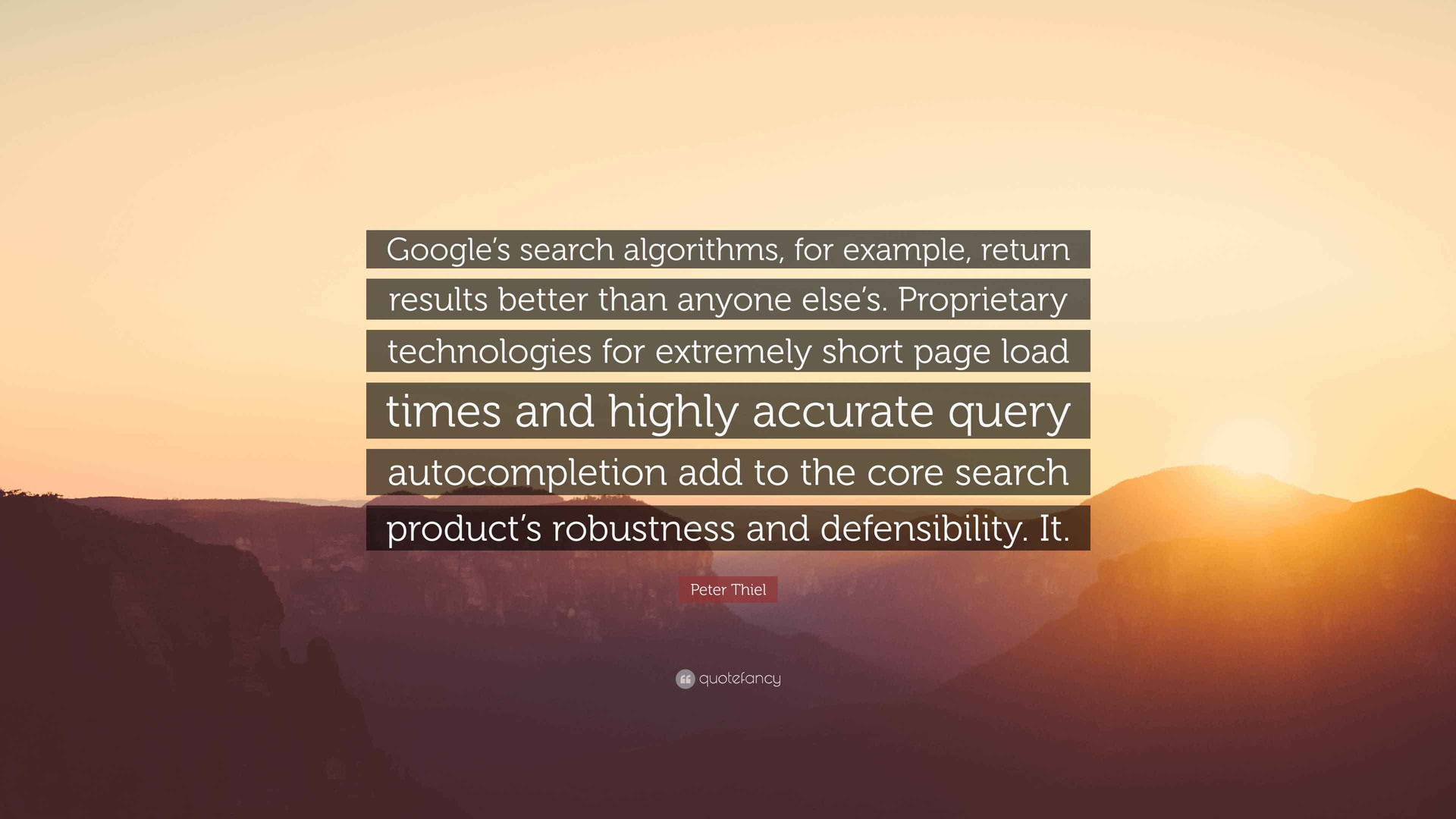
(Peter Thiel Quote)
Who knows? Maybe one day, after many years, a new or already-existing tech company will come in with a much better search engine than what Google already has. Or Google leaks its entire codebase that powers its search engine. But when you focus on the present and look at the current state of affairs, you’ll find that Google will remain a highly influential ruler of the entire internet for a very long time.




 .
.